PMO professionals are often focused on supporting delivery for others, keeping projects, programmes, and portfolios moving smoothly. Yet, when it comes to the development of the PMO team itself, planning and investment can easily fall behind.
A PMO development plan provides direction for both individual and team growth. It connects what the PMO does today with what it needs to do tomorrow, helping teams develop in a way that aligns with business strategy, improves performance, and supports career progression.
What is a PMO Development Plan?
A PMO development plan is a structured approach to improving capability across the team. It focuses on understanding current strengths, identifying gaps, and creating specific actions to close them. These actions might include training, mentoring, process improvement projects, or collaborative learning across the team.
The plan provides a clear pathway for growth. It supports the development of both technical and behavioural skills and links individual goals with organisational priorities. For a PMO, this alignment is critical. It ensures that the time and investment spent on development directly contribute to better delivery outcomes and stronger business value.
For a practical guide on how to create one, download our PMO Development Plans eBook, which outlines the full process, from goal setting to tracking progress, with templates and real-world examples.
Why PMO Teams Need Development Plans
Development planning has long been used for individuals, but applying it across the PMO team creates a much greater impact. It builds shared understanding, consistency, and a sense of collective progress.
A team development plan allows the PMO to:
- Identify skill gaps across the whole function rather than person by person.
- Prioritise learning that delivers measurable value to the organisation.
- Create a shared sense of direction and professional purpose.
- Demonstrate how the PMO is growing capability and adding value.
When development planning is done well, it strengthens both individual confidence and team credibility. It also provides a clear narrative for stakeholders who ask what the PMO is doing to improve.
You can learn more about the ideas behind this approach by watching the PMO Development Plans Webinar recording, where the practical steps and examples are explained in detail.
Starting with a Training Needs Analysis
A strong PMO development plan begins with evidence. Before deciding what to learn, teams need to know where they stand. That is where a Training Needs Analysis (TNA) comes in.
A TNA identifies the skills, knowledge, and behavioural gaps across the PMO, highlighting where development will have the greatest impact. Our TNA Service for PMOs follows a five-step model:
- Understand and set goals.
- Review and assess current capability using the House of PMO Competency Framework.
- Translate assessment outcomes into practical action plans.
- Select learning methods such as training, mentoring, and peer learning.
- Evaluate the results and measure the impact.
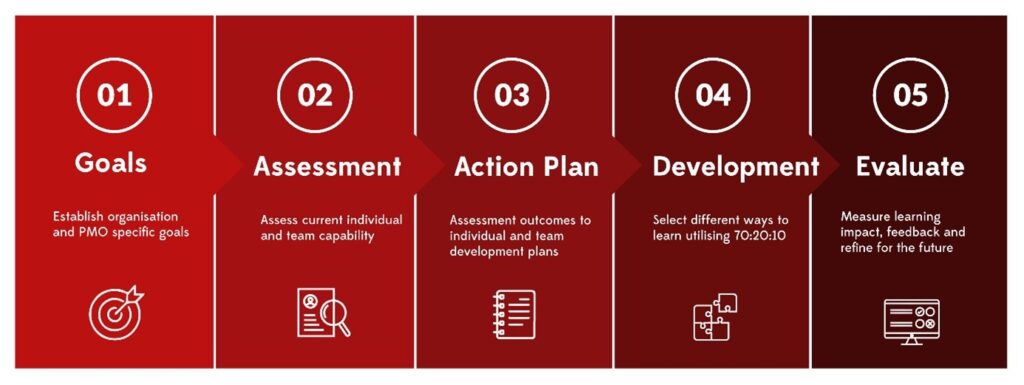
This process brings structure and clarity to development planning, ensuring it is aligned with organisational priorities and focused on measurable improvement.
Explore the PMO Training Needs Analysis Service here.
How to Build and Maintain the Plan
Once goals and priorities are identified, the next step is action. A development plan should outline what will be done, who is responsible, and how progress will be measured.
The 70:20:10 learning model offers a balanced structure:
- 70 percent of learning happens through real work, projects, and problem solving.
- 20 percent comes from mentoring, collaboration, and feedback.
- 10 percent comes from formal learning, such as PMO certification or specialist training.
For PMO teams, this means development can happen continuously, without waiting for big training budgets or long courses. It can include internal improvement projects, peer sessions, short workshops, and guided learning using the House of PMO Competency Framework.
Regular check-ins help keep development plans alive. Teams that track progress visually using simple dashboards or shared boards often find motivation increases when progress is visible.
Turning Insight into Action
A PMO development plan should never sit on a shelf. It should evolve as the team grows, as priorities shift, and as the organisation’s needs change.
The most effective plans are those that feel achievable, personal, and relevant. They encourage reflection, promote collaboration, and ultimately help the PMO demonstrate that it is continually improving its value to the business.
By linking assessment, planning, and practical action, a PMO team can take control of its growth and make learning part of everyday work.
Next Steps
If your PMO is ready to build or refresh its development plan, there are three ways to get started:
- Download the PMO Development Plans PDF – a complete practical guide with templates and examples.
- Watch the PMO Development Plans Webinar – hear real examples and insights from PMO Learning’s experts.
- Book a PMO Training Needs Analysis (TNA) Session – assess your team’s skills and create a development strategy tailored to your PMO.
Taking the time to invest in structured development planning can transform how a PMO operates. It builds confidence, consistency, and capability across the team, helping both individuals and organisations succeed.
Enjoying Our Blog?
Sign up and receive all our articles (we’ll send you an update once a week!) plus special offers and events: