Resource management can look simple from a distance. We have work to deliver, people available to do it and plans that are supposed to bring the two together, yet PMO practitioners know that the reality is rarely that straightforward.
The House of PMO revisited this challenge with PMO practitioners during 2024 and early 2025, leading to the publication of the updated Inside PMO Report: The Circle of Resource Management in June 2025. The report looks at resource management through three connected lenses or parts: Project, Resource and Portfolio, recognising that organisations need to understand not just who is working on what, but whether they have the right capability and whether limited capacity is being directed towards the work that matters most.
In this three-part blog series, we are taking a closer look at each of those lenses, what they mean for PMO practitioners and how they can help organisations understand where resource management is really breaking down. The same three lenses form the backbone of our new Resource Management and the PMO course, where delegates explore each area before bringing them together to identify where the biggest issues sit and what realistic improvements can be made.
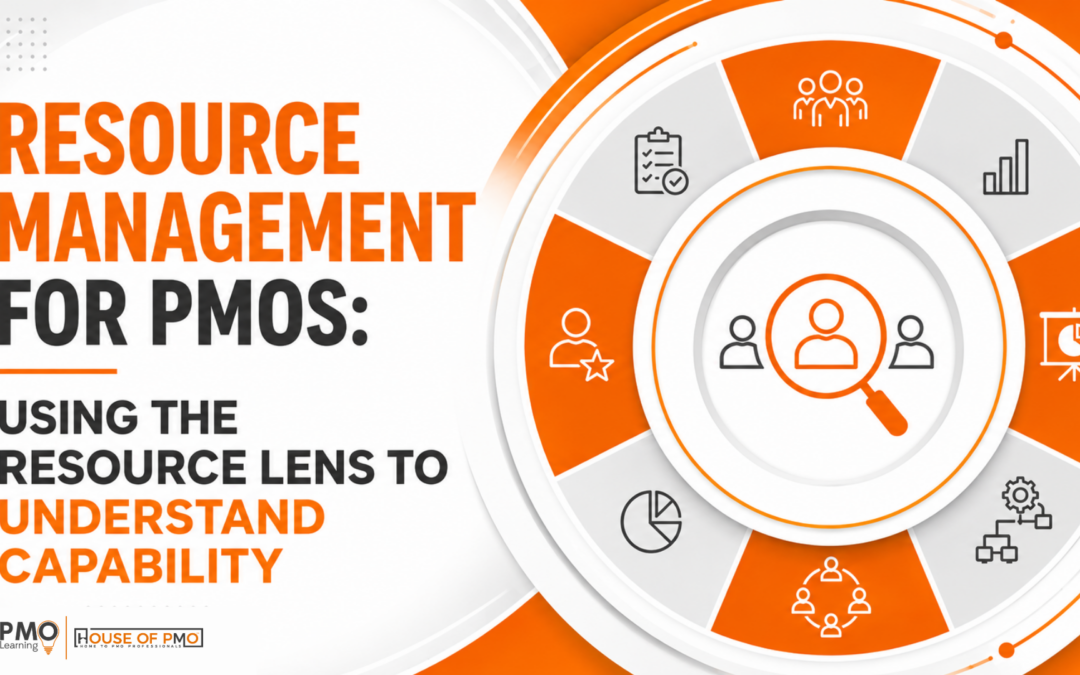
We are starting with the Resource Lens, which looks beyond availability and headcount and asks a more important question: do we actually have the right people with the righ skills and capability for the work ahead?
When the numbers look right but the capability does not
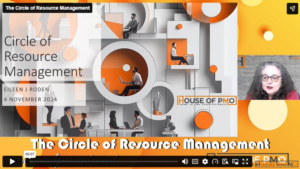
During the 2024 Circle of Resource Management webinar, Eileen Roden gave an example that captures this problem particularly well:
“When pulling our portfolio together, we might say, well actually we’ve got three project managers, but they’re very junior project managers and our portfolio would require them to be more experienced”
The resource plan might tell you that enough project managers, analysts or specialists are available, yet the picture can change considerably once you start looking at experience, skills and suitability. There may be plenty of business analysts but only one with the knowledge needed for a particular transformation, or a critical technical capability might sit with two people who are already in demand across several projects.
This is where headcount can give a false sense of security. Knowing that ten people exist is very different from knowing what those ten people can actually do.
House of PMO Individual and Corporate Members can watch the full Circle of Resource Management webinar here, where Eileen takes a deeper look at the original model, the Resource, Project and Portfolio areas, and the practical resource management challenges behind them.
Can you see the capability gap early enough?
One of the most useful parts of the Resource Lens is that it encourages the PMO to look forward rather than waiting for a project to expose the problem.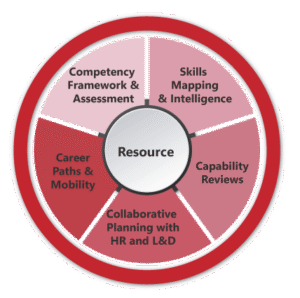 If a future programme needs a capability that is currently weak, there may still be time to develop somebody internally, give them experience alongside a more capable colleague, invest in targeted learning or recruit before the requirement becomes urgent.
That is a much better position than discovering the gap when the project is getting read to kick off and the options have narrowed to delaying the work, paying more for external support or competing with every other project for the same specialist.
The PMO may not own recruitment, learning and development or the people themselves, but it can often see something that other functions cannot: the connection between the work coming through the portfolio and the capability that work will require.
That is where collaboration with HR, L&D, line managers and resource owners becomes important. The updated Circle reflects this directly, with the Resource Lens covering skills mapping and intelligence, capability reviews, competency frameworks, career paths and collaborative planning with HR and L&D.
What do you really know about your resources?
Many organisations still understand people primarily through job titles, which only tells part of the story. Two people can have the same title while having very different levels of experience, specialist knowledge and readiness for a particular assignment. Equally, somebody may possess valuable capability that their formal role does not make obvious.
For PMOs, a useful capability view does not need to become an enormous exercise containing every skill every employee has ever possessed. What matters is having enough information to identify where delivery could be exposed.
That might mean knowing which skills are becoming difficult to find, where the organisation relies heavily on one person, which capabilities future projects will need and where there are realistic opportunities to develop people before demand arrives. These are much more useful questions than simply asking how many people are available next month.
Where does the PMO fit?
The Resource Lens does not suggest that the PMO should suddenly take ownership of workforce planning. In most organisations, that would be unrealistic and probably unwanted. The PMO’s value is often in connecting information that already exists in different places.
HR may understand roles, development and recruitment, line managers understand their people, while the PMO can see the projects and programmes being proposed and the resource pressures already appearing across delivery. Bringing those views together makes it easier to identify a capability risk before it becomes a delivery issue. Half of the battle is making the information visible so a decision can be made and acted on – this is where the PMO really comes into its own.
It also helps the conversation move beyond filling vacancies. Sometimes the answer is recruitment, but sometimes it is development, succession planning, greater mobility across teams or simply recognising that the organisation is currently not capable of delivering everything being proposed.
Taking the Resource Lens further
The Resource Management and the PMO course develops this thinking practically.
Within the Resource Lens, delegates explore the move from availability to capability, looking at skills mapping, capability insight, future demand, resource risk and collaboration with HR, L&D, line managers and delivery leads. The focus is not on asking the PMO to own everything, but on helping practitioners understand where they can provide useful insight and influence better decisions.
The Resource Lens is then connected to the other two parts of the Circle because capability cannot be considered in isolation. The organisation also needs visibility of where project pressure is building and a clear view of whether its limited people and skills are being directed towards the right work.
Our pilot Resource Management and the PMO course takes place on 5th – 6th October 2026 and is designed for PMO Analysts, Managers and Directors who are involved in resource, capability, capacity or portfolio conversations and want a more practical way to understand where the problems sit and what they can do about them.
If your resource plan says you have enough people while experience tells you it might not be that simple, the Resource Lens may help you understand what the numbers are not showing.