There is a lot more to being a good PMO Administrator than arranging meetings, keeping diaries organised and making sure documents are stored in the right place.
Those activities are of course important but the difference between completing administrative tasks and becoming a really effective PMO Administrator often comes down to how you approach the role.
House of PMO’s recent three-part PMO Administrator Summer School webinar series, hosted by Lindsay Scott and Eileen Roden, explored what PMO Administrators need to know, the skills and behaviours that help them perform well, and the habits and common pitfalls that can make a difference as they develop in the role.
This article takes some of those themes and looks at the practical habits that can help PMO Administrators work more effectively, build confidence in the role and better understand the value they bring to their project, programme or portfolio.
Understand Why the Work Matters
It is easy to work through a list of tasks without thinking too much about what happens next. A report needs collecting, an action needs chasing or a meeting pack needs circulating, so you get on and do it.
A stronger approach is to understand the purpose behind the activity. If you are collecting information, who needs it and what are they going to do with it? If you are following up an action, what is relying on that action being completed? If you are preparing information for a meeting, what conversation or decision is it there to support?
Being competent in a PMO role is not just about knowing how to complete a particular task. It also brings together the skills and behaviours needed to use that knowledge effectively.
Developing the habit of thinking about the wider purpose of your work can help you understand where you are adding value, rather than simply moving from one task to the next.

Anticipate Rather Than Simply React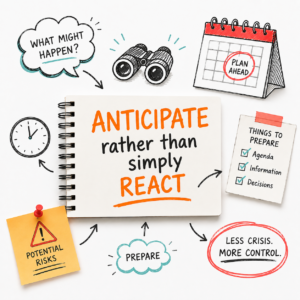
Some of the most effective PMO Administrators seem to know what is coming before everyone else does. They understand when reports are due, which meetings are approaching, what information will be needed and which people may need a reminder before a deadline arrives.
One of the practical habits explored during the PMO Administrator Summer School was anticipating what people might need rather than waiting until a deadline has already arrived. Checking in with someone a few days before their report is due, for example, can help identify problems earlier and keep work moving.
The more you understand the rhythm of the project, programme or portfolio you support, the easier it becomes to spot what is coming next and where a little preparation could prevent a problem later.
Clarify Rather Than Assume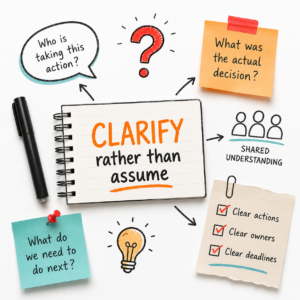
PMO Administrators are often close to the information flowing through a project, which puts them in a good position to notice when something is not quite clear.
Meetings are an obvious example. A lengthy discussion can take place and everyone can appear to agree, yet afterwards it may still be unclear who owns an action, when it is due or whether an actual decision was made.
Asking for clarification is not about interrupting unnecessarily. It is about making sure people leave with a shared understanding of what has been agreed and what needs to happen next. Questions such as “who took that action?” and “what was the actual decision?” were used during the webinar to show how a PMO Administrator can help bring that clarity.
The same principle applies to written communication. Information needs to be clear enough for the recipient to understand what it means, what they need to do and where responsibility sits.
Close the Loop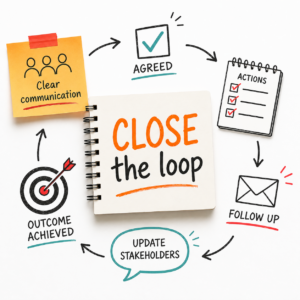
Completing a task and closing a task are not always the same thing. You may have finished something, but if the person waiting for it does not know, they can still be left wondering whether it has been done.
Following through and letting people know when an activity is complete is a simple habit, but it contributes to how reliable you are perceived to be.
Over time, those small interactions build confidence. People know that when you say something will happen, it will happen, and that you will keep them informed along the way. In a project environment with competing deadlines and dependencies, that reliability can be extremely valuable.
Build Relationships Before You Need Them
A large part of PMO Administration involves working with other people. You may be gathering updates, onboarding new starters, preparing reports, following up actions or liaising with people from different teams and functions.
Those activities become much easier when you have already invested time in building good working relationships.
During the PMO Administrator Summer School, attendees were asked what helps to build trust. Their responses included reliability, communication, honesty, transparency, openness and approachability.
Relationships also need to exist outside the moments when you need something from somebody. Taking time to understand colleagues, checking in after a difficult meeting or simply maintaining regular contact can all make future conversations easier.
For PMO Administrators who often work across different teams and functions, those relationships can become an important part of getting things done.
Be Helpful Without Taking Ownership of Everything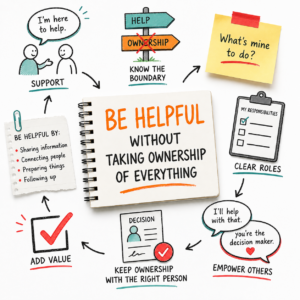
Being helpful is an important part of the Administrator role, but there needs to be a distinction between supporting somebody and becoming responsible for their work.
If you are organised and reliable, it can be easy for more and more activities to find their way to you. Something that starts with helping someone complete an action can gradually become something that everyone assumes you own.
This is a common pitfall for PMO Administrators. The challenge is to help work move forward without becoming the backstop for everything or taking ownership of activities that sit elsewhere.
This distinction came through clearly in the PMO Administrator Summer School, where Eileen described the role as sitting “close enough to the work to see what’s slipping, but not accountable for the project decisions.”
Understanding the wider project environment and the responsibilities of the people within it can make those boundaries clearer. In issue management, for example, the PMO may maintain the register, update information and chase agreed actions, while ownership of the issue and the relevant decisions remain with the appropriate project or programme roles.
Being supportive does not mean having to own everything yourself.
Make Your Contribution Visible
There is an interesting challenge that comes with being very good at PMO Administration. Sometimes the better organised everything is, the easier it is for people to underestimate the work involved in keeping it that way.
Administrators can spend a significant amount of time making other people’s jobs easier, yet their contribution may still be viewed as “just admin”. Making the value of the role visible is therefore important.
That is not about taking credit for everything that happens. It is about recognising the connection between your work and the outcome it helped to create.
A meeting may have reached a decision because the right information was available. An issue may have progressed because its actions were consistently followed up. A Project Manager may have been able to concentrate on delivery because the administration and governance around them were under control.
These are all examples of the wider value that good PMO Administration can bring.
Keep Developing Your Role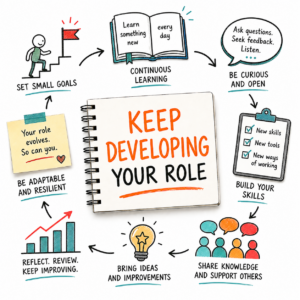
Nobody starts their PMO career knowing everything they need to know. Many of the skills and habits that make a strong Administrator develop through a combination of experience, knowledge and practice.
It is worth taking time to recognise that development. Perhaps you are becoming more confident speaking up in meetings, improving how you communicate with stakeholders or gaining a better understanding of how areas such as reporting, risk and issues fit together.
The three-part PMO Administrator Summer School followed a similar journey, beginning with the purpose of the role and the knowledge Administrators need, before moving into skills and behaviours, good habits, common pitfalls and career development.
If you would like to explore those conversations in more detail, House of PMO paid members can watch the full PMO Administrator Summer School series in the membership library.
Develop Your Skills with Essentials for PMO Administrators
If these habits have made you think about where you are confident today and where you would like to develop further, the House of PMO Essentials for PMO Administrators course provides a structured next step.
This course explores the context in which PMO Administrators work, the different roles within a PMO and the competences needed to perform the Administrator role successfully. It also goes further into P3M Administration and Delivery Support, covering areas such as risk, issue and information management, change control, financial management and reporting, insights and analysis.
If you want to strengthen your knowledge, develop the skills and behaviours behind your everyday work and build greater confidence in the value you bring to your PMO, find out more about the Essentials for PMO Administrators course.