Resource management problems often become most noticeable when a project starts to struggle, perhaps because somebody important is suddenly unavailable, the same specialist has been promised to several pieces of work, or a project manager discovers that the person shown on the resource plan has considerably less time available than expected.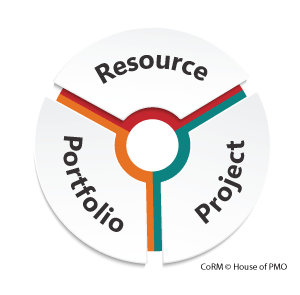
By that point, the conversation can quickly become about finding another person, renegotiating dates or escalating a conflict, even though the pressure may have been building for weeks and could have been visible much earlier.
This is the second blog in our three-part series exploring the Circle of Resource Management and the three connected lenses within it: Project, Resource and Portfolio. In the first blog, we looked at the Resource Lens, where the focus moves beyond headcount and availability towards skills, capability and future demand. You can read the Resource Lens blog here.
The same three lenses form the backbone of our new Resource Management and the PMO course, where delegates explore each area before bringing them together to identify where the biggest issues sit and what realistic improvements can be made.
The House of PMO revisited the original Circle of Resource Management with PMO practitioners during 2024 and early 2025, leading to the publication of the updated Inside PMO Report: The Circle of Resource Managementin June 2025. The updated model recognises that the three areas are interdependent, with the Project Lens focusing particularly on dynamic resource allocation, real-time utilisation, visibility, resource conflicts and coordination across teams.
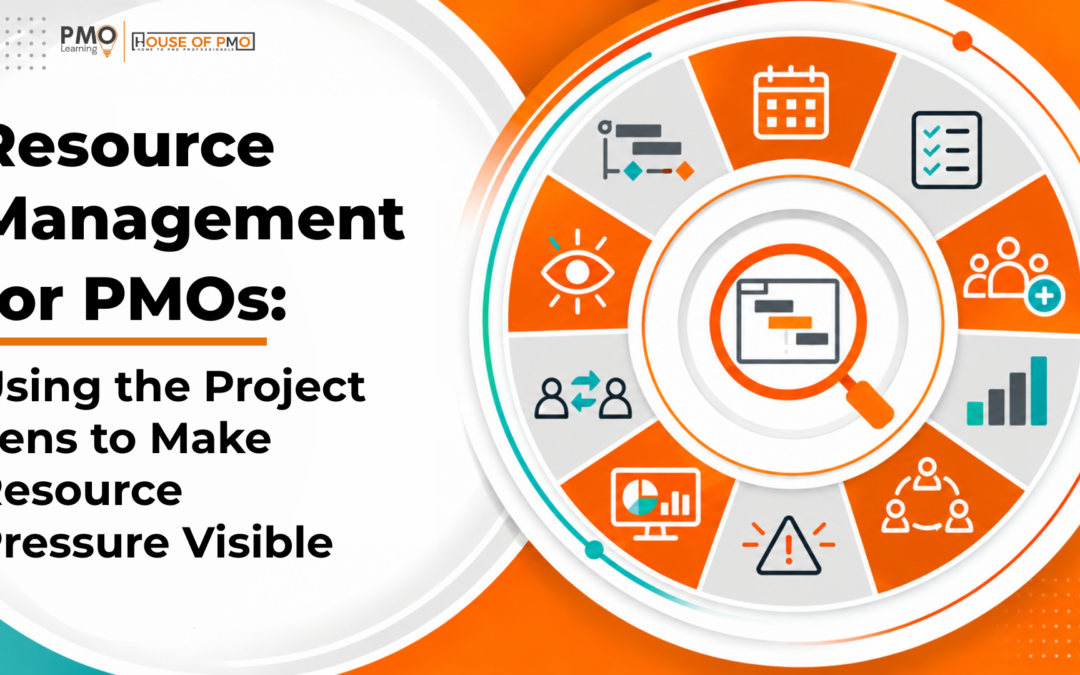
In this second article, we are looking at the Project Lens, where the question is essentially: who is doing what, and does the reality match what the plan says?
When the project plan and reality are not quite the same
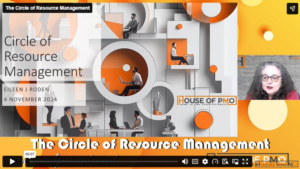
During the Circle of Resource Management webinar, Eileen Roden talked about some of the simple checks she used when working with planning tools, including:
“who has been allocated to a project but actually hasn’t been allocated to a task.”
She describes the result as having a person effectively floating on a project without any work attached to them, while another project elsewhere in the organisation could be struggling to find exactly that kind of resource.
It is a simple example, but it highlights an issue many PMOs will recognise because having somebody’s name on a resource plan does not necessarily tell you how they are actually being used.
A project may have somebody allocated for several weeks, yet the work they were expected to complete has moved or disappeared. Someone else may have been allocated for a short period but ends up carrying much more work than planned, while another person looks available in one system even though a large part of their week is already committed elsewhere.
The Project Lens helps bring those differences between planned allocation and delivery reality into view.
House of PMO Individual and Corporate Members can watch the full Circle of Resource Management webinar here, where Eileen explores the original model and the practical challenges sitting across the Project, Resource and Portfolio areas.
Visibility does not have to mean micromanagement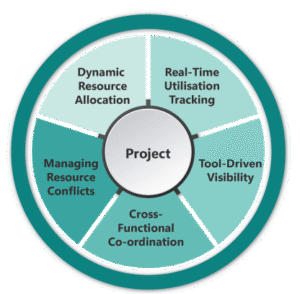
When we talk about improving resource visibility, it is easy to imagine another layer of reporting, increasingly detailed timesheets or somebody in the PMO trying to account for every hour of every person’s working week.
That is not the intention of the Project Lens.
The updated report describes the project-level challenge as the daily reality of assigning individuals at the right time, managing workload and tracking utilisation, while also recognising that detailed task-level planning can quickly become unmanageable when priorities change and people are working across several initiatives.
For the PMO, the useful level of visibility is usually enough to understand where pressure is building and whether the assumptions being made about people’s availability are credible.
If somebody is split between two projects and BAU activity, is that visible? If a specialist repeatedly appears at more than full capacity, does somebody challenge it? If people are allocated to projects without meaningful work against them, is there a way to release that capacity rather than quietly protecting it?
Those questions provide useful decision information without asking the PMO to take over detailed project scheduling.
The same people are rarely working on only one thing
The reality of multi-project environments makes this harder because most people are not working neatly on a single initiative.
The Circle of Resource Management report highlights people being spread across several projects alongside business-as-usual activity, with context switching creating a cost that can easily disappear from resource plans. It also notes cases where individuals were booked at 120 per cent across initiatives, with the problem only becoming obvious once delivery started to slip.
This is particularly relevant for the subject matter experts that projects often rely upon.
A project manager might believe they have a finance specialist, architect or operational lead for two days each week, while the person’s line manager knows that those same two days are competing with BAU responsibilities, urgent operational issues and requests from several other projects.
On the spreadsheet, the allocation might still fit. In practice, the person spends their week moving between priorities, attending meetings for multiple teams and trying to work out which commitment needs attention first.
For the PMO, seeing project and BAU demand together can therefore be much more useful than having a beautifully detailed project-only resource plan.
Resource conflicts tell you something useful
Better visibility will not stop resource conflicts from happening, and in many cases it will make them more obvious because competing demand can no longer remain hidden. Two projects may genuinely need the same specialist during the same period, with both project managers able to make a reasonable case for why their work should come first.
The PMO’s role is not necessarily to decide who wins. It can, however, make the conflict easier to resolve by showing what the choices mean.
If the person moves to Project A, what happens to Project B? Which milestones change, which dependencies are affected and what risk is being accepted? Is there another resource who could step in, or does the issue need to be escalated because the organisation has more demand for that capability than it can currently supply?
The Project Lens within the course focuses on exactly this type of situation, covering utilisation, allocation, project-level visibility, resource conflicts and the judgement PMO practitioners need when supporting those conversations.
Sometimes the answer will be a straightforward reallocation. At other times, the conflict is telling you something bigger about the organisation.
If the same person or capability is repeatedly fought over, you may be moving out of the Project Lens and into the Resource Lens, where the issue is an underlying capability shortage, or the Portfolio Lens, where leaders need to decide whether all of the work should be happening at the same time.
Good resource data should lead to a conversation
One of the risks with resource reporting is that producing the information becomes the objective. A utilisation report that shows several people consistently over-allocated is only useful if somebody acts on what it shows. The same applies to information about unused capacity, resource clashes or people being divided across too many pieces of work.
The Project Lens is therefore as much about the conversations that follow the data as the data itself.
For a PMO Analyst, that might mean spotting patterns and making pressure visible before it becomes a project issue. For a PMO Manager, it could mean facilitating the conversation between project managers and resource owners and helping them understand the available options. At a more senior level, it may mean making sure unresolved conflicts reach the right decision-making forum rather than allowing everybody to continue with assumptions that cannot all be true.
The course takes the same approach, with an emphasis on improving visibility of resource demand, utilisation, allocation and conflict without creating unnecessary administration.
Taking the Project Lens further
The Resource Management and the PMO course begins with the Project Lens because this is where many PMOs already have some information and where resource pressure is often easiest to recognise.
Delegates explore how to make workload and allocation visible, where utilisation information is useful, how tools can support rather than complicate the process, and how resource conflicts can be handled with clearer evidence and escalation routes. The emphasis is on providing useful insight without drifting into task-level micromanagement or building reporting processes that become more work than the problem they were designed to solve.
The Project Lens is then connected to the other two parts of the Circle because project-level resource management only tells us part of the story. The Resource Lens helps us understand whether the capability exists in the first place, while the Portfolio Lens helps leaders decide how limited capacity and capability should be used when there simply is not enough to do everything.
Our pilot Resource Management and the PMO course takes place on 5th – 6th October 2026 and is designed for PMO Analysts, Managers and Directors who are already involved in resource, capacity, capability or prioritisation conversations and want a more practical way to understand where resource problems are coming from and what the PMO can realistically do about them.
The Project Lens will not remove the day-to-day juggling that comes with resource management, but it can help the PMO see the pressure sooner, understand what is really happening behind the plan and bring better evidence into the conversation before a resource issue becomes a delivery problem.